Page 59 of Darkest at Dusk
Send her away, said the last decent part of him. Put her in the coach and keep her on the road until London takes her in and Harrowgate forgets her.
But decency was the smallest part of him now. Without her, the dead he loved would go on as they were, trapped in the circle that eats its own tail. He would not doom them to that. He would sacrifice morals and honor to give them rest.
He went down the passage to the library. The knob turned under his hand and a breath of wet ash met him. The brass box sat on the corner of the desk, the lid closed.
He had no proof, but instinct assured him…she had opened it.




He had wanted her to open it. He had baited the snare.
He had purchased the damned box because her key would fit.
His gaze went to the toppled books and the faint scorch licked into the nap of the carpet. The thing had come to her here. It had shown its teeth.
“You will not have her,” he told the empty room, and the house answered with a steady tapping in the wall.
He crossed to the desk and touched the box. Cool under his palm. He could all but see the letters inside, his mother’s elegant hand, the perpendicular cross-writing when she’d run out of space.
How many had she read? Some? All? If not yet, then soon. She was too curious not to want the story in its entirety.
Let the gossip in Marlow tell her what he could not: locks set after the fire, masons who would not finish, tools that walked, and most damning of all, that a girl had burned behind a door others swore was barred from without. Wasn’t that precisely why she had gone to Marlow? To discover his secrets…his and Harrowgate’s. But they were one and the same.
The chorus in the walls thinned and gathered, listening.
He looked toward the door and thought again of the coach, of Mrs. Abernathy’s sensible obedience and the ease with which he could command it: Take Miss Barrett to see the Burns sisters.
What she heard there would turn curiosity into hunger and send her back starved for answers. He would make certain they lay in wait for her to discover.
He left the library and climbed. On the landing the air was warmer by the wall, wrong as breath in a sealed room. He paused outside Isabella’s chamber, set his hand on the latch, and let his knuckles rest there without pressing. Boundary. Courtesy. He had already trespassed against both in both thought and design. He eased the door open and stepped in.
The bed was neatly made, the heavy curtains parted an inch, allowing a spill of daylight onto the carpet. Against the far wall, the trunk waited, iron-banded, brass-cornered. He crossed to it and crouched, ignoring the clutch of pain in his left leg.
Thorn & Sons, Ludgate Hill, the cartouche read, bee and all. The same mark adorned the brass box in his library; the same hand had cut both wards.
He sat back on his heels and studied the trunk. He could unlock it now, while she was away, rifle through the contents, find the grimoire if it was there. Doing that might win him the book, but he would lose the prize if she discovered his trespass. Her trust. Her willing collaboration.
“Not today,” he said. If he breached her privacy and she learned of it, there would be no coming back from that.
He rose and left her room as he had found it.

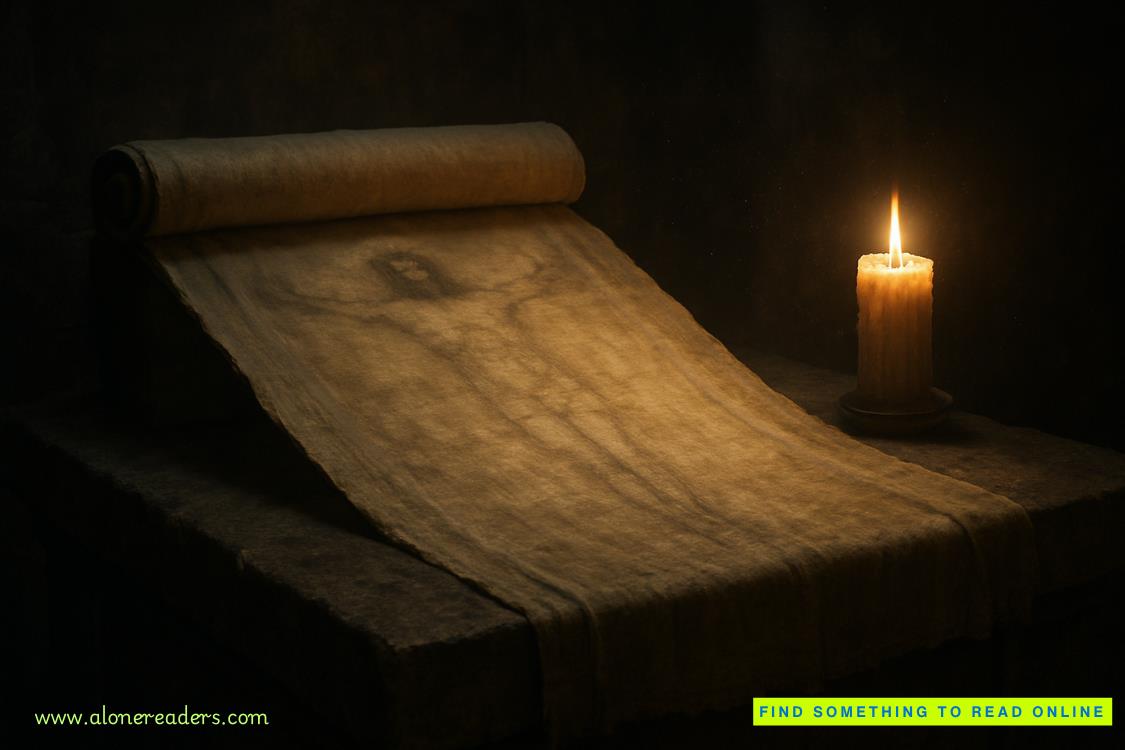

In his workroom, the half-grimoire lay where he’d left it, brass inlay shaped like a broken coin gone dull with handling. The diagram at its heart named two halves, hands joined. Two willing halves joined and the gate will open. He had chased that promise for years until it brought him to London and to the girl who quieted the house’s noise simply by breathing in it.
Willing was the hinge. If he told her what he wanted, what he needed, she would think him both mad and monstrous. She had spent a lifetime being taught not to see what she saw, not to hear what she heard. Push too soon and she would flee.
No, she must tease the threads apart herself, discover the pieces and solve the riddle on her own. Only then might she be willing. Only then might they end this.
The wall at his back ticked. A child’s thin cry threaded the sound; a mother’s sorrow shaped the air, thick and heavy. He set his teeth until his jaw ached.
“I hear you,” he said. “I am coming.”
Chapter Fourteen
The carriage rattled into Great Marlow’s High Street, wheels clacking on the cobbles. Isabella paused as she stepped down, looking about. Red brick fronts and timbered gables pressed close; painted signboards creaked on their irons. A brewer’s cart went by and left malt on the air.
People were out, but welcome was not. Heads bent, steps quick, they cut sidelong glances at the carriage, wary.
As Tom helped Mrs. Abernathy down, Isabella’s gaze fell on a little boy standing by the horse trough, hair plastered to his head, clothing wet, the building at his back showing clean through him.
Her breath hitched, then steadied. Habit returned, and she let her gaze pass over him as if he were not there.