Page 90 of Dragons of the Great Wyves: Fire and Song
These were the men planning to fight. There would be more in the village. Their weapons were stashed in this ruined castle.
Darcy’s hand touched my elbow, hurrying me forward.
We passed into the castle’s interior. The roof was long gone, even the supporting beams vanished, but heavy stone walls remained on three sides, one of them massive and three feet thick, part of the fortified central keep.
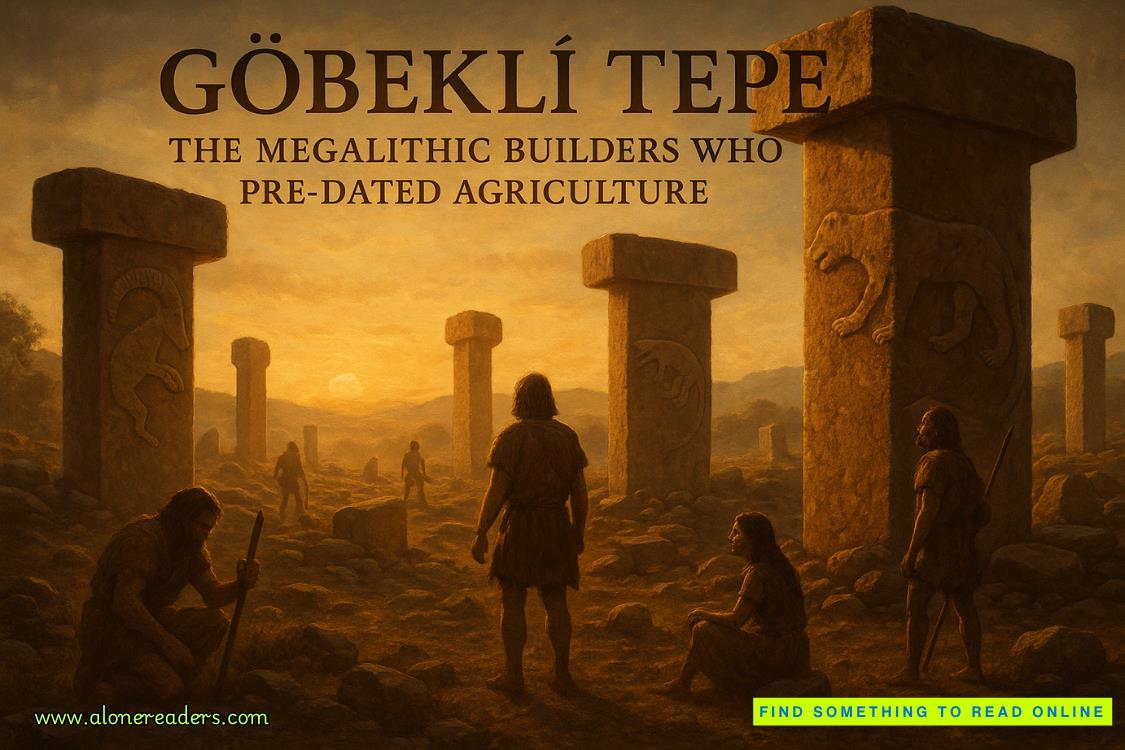
The Pictish stones were standing upright in the fresh spring grass, two of them, each as wide as my shoulders, as high as my chest, and carved with runes. They had been moved here recently—I saw crushed grass—but they had an air of stupendous age, the carvings deeply incised then smoothed by the centuries until they seemed drawn by rain and wind.
Mistress MacLeod fell onto her knees before them, an almost religious observance. “See here the auld stones.”
“How old?” Darcy asked.
“A scholar would tell ye they’re before the Picts were Christian folk, and that’d be true. Not that the Picts ever let go the old ways, Christ or not.” She brushed a few bobbing seed heads aside, clearing the face of the leftmost stone. “These hail from a Britain with gods of briar and bog. Myseanmhair”—she glanced over her shoulder—“my nanna that means, she taught me to read them, for the story is told only at the stones, and the mistress of the strath must be the one to read it.”
Reverently, she touched her fingers to her forehead, then to the first stone. “The Wyves’ Stone.” Sharply, she stabbed two fingers at her heart, then touched the second. “The Stone of Betrayal. Together, they tell the tragedy of the flute.”
That word, “betrayal,” stung my guilt, then a colder realization drowned that. This wasthestory, the very history I had concealed from Darcy. The story that had played out on this hilltop long ago.
On the Wyves’ Stone, Mistress MacLeod’s finger traced the top row of symbols. “Three ovals for three leaders. Those are the Scottish great wyves.”
That interested Darcy. “The pre-Christian Picts lived a thousand years ago.”
Mistress MacLeod nodded. “So I’m told.”
“Then the dates do not match. The great wyves fought in the Scottish wars. That would be five hundred years.”
She snorted. “That’s theEnglishstory. The great wyves never fought England. If they had, there wouldn’t be an England, would there? It’d all be Scotland.”
“That is a bold assertion—” Darcy began, sounding irritated, academic, and rather like Mary. Perhaps that was why they got along so well.
“The great wyves united would have defeated England,” I said, silencing him, “but the Scottish wyves were dust long before England existed.”
“Mind ye,” Mistress MacLeod added, “the wyves did fight. We’ve no lack of wars in the north.”
Her words were brightening my own recollection. Helmsdale hill seemed to roll back through time. Despite the dull, overcast sky, sea wind lifted my hair. Salt bit my nostrils.
I knew the story. Pretense was pointless. “The Scottish wyfe of war was a Bennet.”
Mistress MacLeod’s gaze found me. “Aye. Her clan name was an old form of that.”




“It sounded almost French…” I sifted through the past. “Bénet.”
Darcy was confused. “You knew this?”
“I knew before we left Pemberley.” I made myself meet his gaze. “I lied to you there.”
I had expected anger or hurt when the truth was revealed. Instead, his confusion ended. His tension eased, leaving only a swordsman’s alert balance.
“I thought you had not told me everything,” he said. “I only wondered why.”
“You would not have come if I told the truth.”
He shook his head. “Nothing could keep me from your side. Nothing could keep me from seeking the flute…” He trailed off, watching Mistress MacLeod. He was beginning to suspect.
She resumed her story by touching the last row, three elaborate symbols. The first was a sinuous draca intertwined with a bent arrow: “Command, for the wyfe of war.” Then came a Celtic knot: “Binding, for the wyfe of healing.” Last, there was a stylized rod in two parts: “Duiseal, the flute, for the wyfe of song. This stone recounts the great wyves allied on Scottish soil. They stood on Helmsdale hill. The Wyves’ Stone is a proud stone.”
Darcy grated out, “What is the Stone of Betrayal?”
“Well, as happens, there was a war.” Mistress MacLeod moved to the second stone, laced with moss and lichen. “A battle of two great clans, north and south, as tends to be. Blood was shed aplenty, and the north paid the higher price, but the northern clan had the great wyves, so their chief asked them to aid the fight. The wyves met to decide, aye or nae, on Helmsdale hill.”