Page 173 of The Ladies Least Likely
“Was it forgery that Bishop Thomas Percy found and reprinted hisReliques of Ancient Poetry?” Mal said. “No. He was simply sharing antique works he had discovered that he knew would be of interest.”
Amaranthe put a hand over her pounding heart. She’d told Mal about theReliquesin one of their conversations on the road. Its publication ten years ago, when her father brought the manuscript into their house, had enchanted her thoroughly, confirming her love for ancient writings and her commitment to rescue them for others, just as Percy had salvaged his ballads from the manuscript he’d found a maid using to light fires.
“Was it forgery if young Thomas Chatterton indeed created the Rowley manuscripts?” Mal went on. “Perhaps.”
Amaranthe tried to control her shortness of breath. She’d told Mal all about Chatterton, too.
“But Miss Illingworth is not creating any works that she means to pass off as antiques,” Mal said.
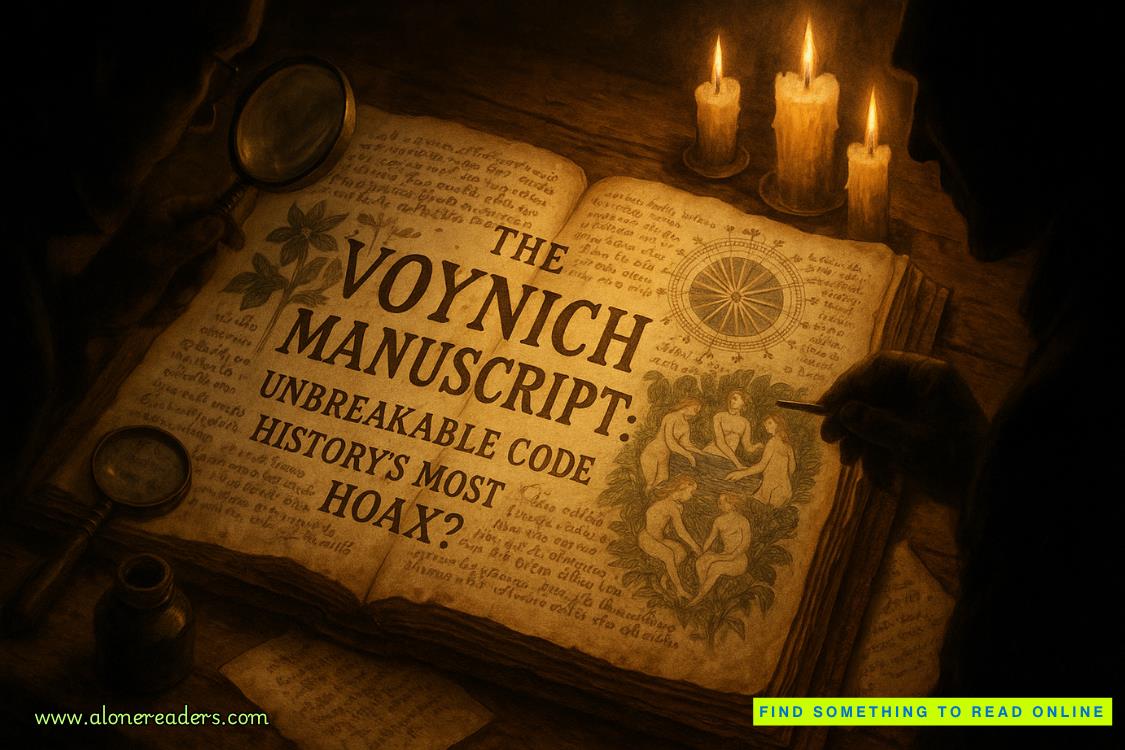
That was a lie. If anyone looked in the locked cabinet in her study, they’d find a whole row of books she’d reproduced for herself. Stolen, as Mal put it, just as she’d stolen the treatise on the spheres. She could and might try to sell them as ancientworks, if it increased their value. She was a businesswoman as well as an artist. Besides, Mal had seen the title page for herBook of Secretsand guessed at once what she was about.
She ought to have burned that page as soon as he left her. She’d burn it the moment she arrived home. The manuscript Ned had given her was priceless, but she would not steal from the Delaval children. She’d find another way to share the knowledge within.
But Thorkelson was still right. All the manuscripts he’d identified had been forged by her. There was no way around it.
How bitterly she regretted now what had once seemed like her only possible means of sustaining herself, Joseph, and their household. If she did not have a protector or income of her own, a woman was forced to go into service or sell her body. Inez was proof of that.
But Inez was also proof that honest labor was better than thievery. Why had Amaranthe never chosen the straight and narrow path?
She wished Mal would not lie, here in a court of law, to protect her. Yet he pressed on.
“I have consulted with Mr. Karim himself and have a deposition that he recorded with Mr. Rosenfeld—if the court will allow me?” Mal’s barrister brought forth yet another document and presented it to the judge, who took it with great interest.
“Mr. Karim attests therein,” Mal said, his manner growing more formal, “that the manuscripts furnished him by Miss Illingworth, rather than mere reproductions, are special editions of her own making. He has identified several places where text has been changed or corrected, and the work in fact bears her signature, in the form of a distinctive mark. A mark in the shape of a flower of the amaranth family, as it happens, which also happens to be her given name.
“Furthermore, Mr. Karim attests that none of the manuscripts he has obtained from Miss Illingworth are works over which the original author might exert control,” Mal said. “John of Holybush lived over five hundred years ago. The two other manuscripts you mention were reproduced from the library of St. John’s College at Oxford, one of our greatest universities, which, if I need remind you, has been dedicated for centuries to preserving and disseminating knowledge for the good of the nation, as a matter of public trust.”
Amaranthe’s head whirled. Mal had spoken with Mr. Karim. He had discovered what she was about and then had gone to the bookseller to investigate the extent of her crimes. And Mr. Karim, with his sharp eye, had discovered for himself what Amaranthe was up to. But rather than shape his discovery into damning evidence, Mal had taken a position that would exonerate her and Mr. Karim both.
He was using his knowledge of the law to save her.
He was also using what she guessed to be his barrister’s voice. It was low and smooth, with a rich, smoky timbre, hypnotic. She found herself nodding in response to his questions, caught up in his argument.
“Were these works entered by their authors into the Stationer’s Register and thus protected by copyright?” Mal said, his voice swelling to fill the room. “No. Were they works held in copyright by another publisher? No. These are works in factnotprotected by copyright and therefore not governed by the Statue of Anne. These works belong to the public domain and there are, therefore, no restrictions on their duplication or circulation.”
He turned a steely glare on Thorkelson, then the man called Froggart. “Miss Illingworth is in violation of no known laws and cannot thereby be charged with forgery. You have made a false accusation that one may, in fact, consider libel.” A chargeable offense.
Amaranthe repressed a smile of giddy relief. Mal had accused her of forgery himself, but no matter. She tried to look meek and innocent as Oliver turned a probing gaze on her.




“It does not appear that Miss Illingworth has trespassed as you say, Mr. Thorkelson,” he observed. “She has broken no laws in reproducing and then selling copies of these works.”
“That doesn’t mean she didn’t forge those marriage lines,” Sybil cried. “It sounds like she very well could have.”
Amaranthe drew a deep breath. Just as Mal had been deemed unworthy all his life because he was a bastard, she was deemed unworthy by the mere fact of her sex. There was no earthly reason, nor precedent, for a man of authority to listen to her.
“Your Honor,” she said anyway, “an examination will prove these documents are not forged. If you will permit me to approach?”
Oliver motioned her forward, and Mal fell in beside her, his shoulder brushing hers. She reined in the impulse to lean against him.
“These documents cannot be new, because the parchment is not new,” she said with quiet authority. “Do you observe this texture? These pages are some decades old. Parchment, particularly vellum, which this is, will tend to buckle as it dries. It is why medieval books are held together with clasps.
“Furthermore, I suspect both of these pages were cut from the same larger hide. There’s a very distinct pattern of coloration shared by both, when put side by side. The pattern of capillaries on both suggests the hide was not scraped as smooth as could be, nor were the folios smoothed with pumice before being written upon, which means the pages were not meant for manuscript but for records that would only be seen once.”
She tapped a finger on the ink. Her own finger, if the gloves were off, would have shown the ink stains from her toils thatmorning, but no matter. “Your second indication is the ink. Oak gall ink, unlike lampblack or India ink, fades over time. If you look at the notations being made by our court scribe there, you will see the letters are dark and black only when they are freshly laid down.”
Somewhat abashed, the clerk, whose fingers were more stained than Amaranthe’s, held up his most recent sheet for Oliver to inspect. The ink, still drying, immediately ran toward the feet of his letters, and he hastily turned his page flat.
“These letters have faded to a light brown.” Amaranthe pointed. “The same shade of brown, as you can see. Both were written hastily, in the kind of court hand our scribe is using, but you can identify the same hand by the foot of the Y character and the use of the thorn character for ‘th.’ It is an archaic usage, but faster to write one character rather than two. I noticed the same usage in other records of these years when I studied the parish register.”