Page 43 of Wickham Likes 'Em Young
Mr Goulding was sent away again with the report that Jane was better but not yet well enough for his call. After he had left, Jane was allowed downstairs in her wrapper, well bundled up on a settee set quite close to the fire.
Elizabeth and the Darcys were urged to keep well away. They spent some time with Mary, playing the pianoforte, and later the four of them donned their outerwear and walked under leaden skies.
Darcy managed to find a few minutes of privacy for a renewal of his more physical attentions.
“I wish that we could marry earlier,” Elizabeth said while her heart and breathing rates recovered.




He groaned and said, “Hearing your urgency makes me quite undone, Elizabeth.”
But then they straightened their clothing and restored hairpins and hurried to find where Mary and Georgiana had gotten to.
The next several days, Jane seemed much better. She still avoided being close to the kitchens and had carefully curated meals on trays in her room, but Elizabeth was glad that she was no longer retching.
Jane dressed and joined the family, other than for meals, and she was even able to attend church as usual. Still, neither Jane nor their mother said anything about Elizabeth moving back into their shared bedroom, for which she was actually grateful.
Beginning the day after the ball, Elizabeth noticed that her mother seemed increasingly anxious. She realised that, although her mother still worked on plans for Elizabeth’s wedding, she no longer happily crowed about two daughters engaged. And although Jane and Mr Goulding had resumed visiting in the parlour, they never announced their wedding date. A growing dread gripped Elizabeth. Could her sister be more ill than she had thought? Was the reluctance to set a wedding date an indication that she was…going to die?
Surely not!
She arranged a bit of privacy on a walk, and Darcy looked eager to take advantage of a copse of trees, but Elizabeth held up her hand. “I am so sorry to not be thinking about…what I know very well you are thinking about…. But I am so anxious, and I have to confide in you. My parents seem so…I would say that they are upset but also that they seem quite unapproachable. And Hill just sets her lips together and says nothing when I come even close to asking…. There is nobody else that?—”
Darcy took both of her hands in his but did not pull her into his embrace. He said, “Tell me. Do not worry about what I might be wishing to do, because it is always my wish to be serving you. What is troubling you, Lizzy?”
Darcy almost never used her family nickname, and hearing it from his lips, just now, sent tears into her eyes. She eagerly voiced all of her worries. Of course, he had already known of Jane’s illness, but she was more specific about everything she had seen and heard, in case he was familiar with illnesses she knew nothing of. She spoke of her mother’s change in attitude and about the oddity that, although Jane seemed almost entirely well, there was no talk about Jane’s wedding.
“And it is not as if Mr Goulding has turned from her, as Mr Bingley did—and, oh, that may sound as if I am blaming Mr Bingley for abandoning Jane, but you know that I do not feel that way at all!” She gulped a bit. She was not sobbing, but tears continued to rise up in her eyes and just run down her cheeks, and she felt quite foolish—what would crying help? But she finally said her deepest fear: “No, Mr Goulding seems as much in love with Jane as ever, and he comes every day, but I got to wondering if my mother seems so down, and there are no plans for Jane’s wedding—I wondered if Jane could be dying?”
Darcy did not dismiss her idea immediately, which was very good—she hated when people treated her worries as unimportant—but which was also not so good. A part of her wanted him to immediately say, “She could not be dying and look so well.” But he did not say that; instead, he hesitated and then said, “I trust Netherfield’s housekeeper almost as much as Pemberley’s beloved housekeeper, Mrs Reynolds. Mrs Nicholls seems to know a great deal about medical matters, and she has shown herself to be discreet and loyal, concerning those earlier rumours about your sister’s nighttime…disappearance. Would you agree to coming to Netherfield to ask her opinion?”
Elizabeth said, “Oh! Why did I not think of her? That is a very good idea! Can we go now?”
He did embrace her, then. He said, “Certainly. I will arrange the carriage while you ask Mary and Georgiana to come with us so that they can use Netherfield’s pianoforte.”
Darcy, Elizabeth, and Mrs Nicholls sat together near the cheery fire in Mr Bingley’s study. Mrs Nicholls promised that the room was quite soundproof, and so Elizabeth spoke freely. She referenced Jane’s illness, the night of the ball, and then she told of the early-morning retching and the avoidance of food odors. She was specific and detailed and, as she considered her emerging theory that Jane might be in the grip of a fatal illness, she closed her eyes, willing the tears away. She did not hint of her fear, but simply asked if Mrs Nicholls had a suggestion as to the nature of the illness.
She opened her eyes and saw that the housekeeper looked surprised and a bit dismayed, but that she was very hesitant to answer Elizabeth’s question.
“Is it very awful?” Elizabeth cried. “Do you think she is going to die?”
Mrs Nicholls laid a caring hand over Elizabeth’s and said, “I believe I know what is happening, and I imagine that your mother does, as well. And I believe that Miss Bennet is not fatally ill. But…I hesitate to say…. It is not for me to…that is, I should hate to be the source of…. Oh, dear. I am not sure that I should be telling you, but I am absolutely certain that I should not be telling Mr Darcy.”
He stood immediately, but Elizabeth grabbed his hand and whispered, “Stay. Please.”
He sat.
She turned to Mrs Nicholls and said, “No matter what it is you are thinking, if you tell it to me, I will tell it to Mr Darcy, and right away. So please, if you have an idea, I would beg that you tell us both.”
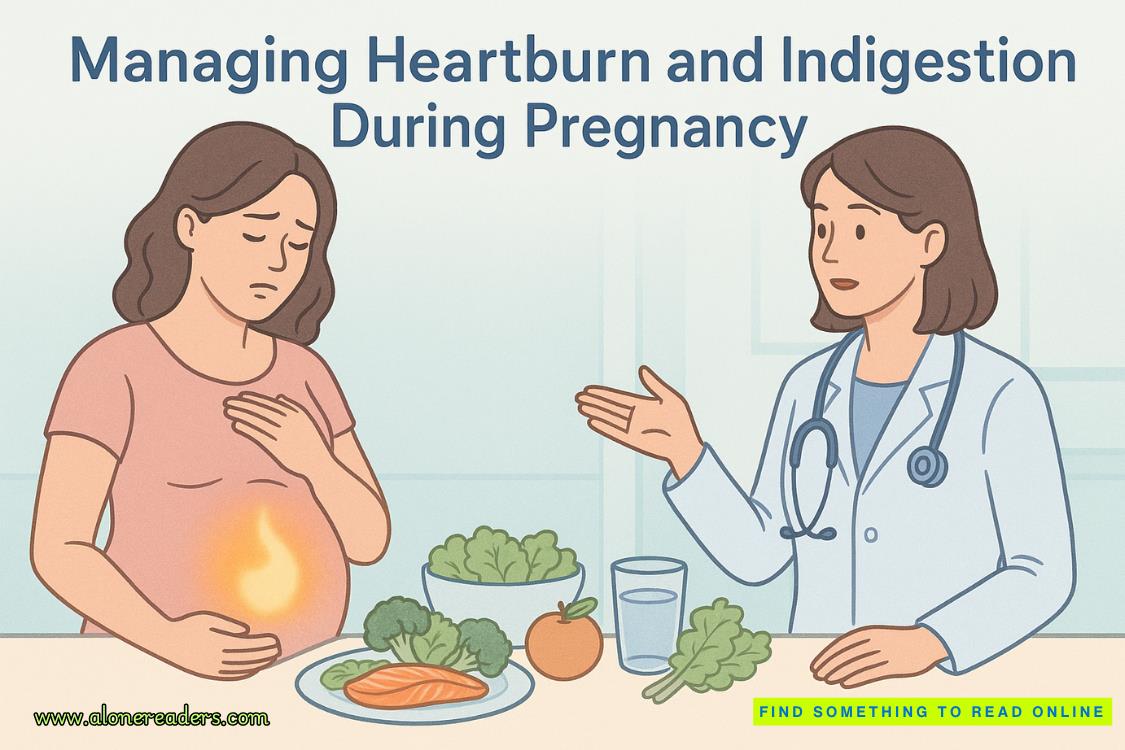
Carefully keeping her eyes away from Darcy’s face, Mrs Nicholls said, “The retching, the avoidance of food smells, and yet being mostly well other than early in the morning…I am reasonably certain that your sister is with child.”
Elizabeth’s tears dried immediately. “Oh!” she said. She ventured a look at her betrothed, and he was blushing.
“My mother had five pregnancies, so I suppose she would know,” Elizabeth said. “I think that explains much of what my mother has said, and her anxiety—actually, it explains a lot of things.”
Darcy said, “Thank you, Mrs Nicholls. Obviously we will be discreet, and we came to you because we knew you would be, too.”
Elizabeth’s stunned brain started working again, and one word rose up within her. The word was “who?”—but she definitely did not want to ask that, so instead she asked, “How far along…would women be to have these symptoms?”
Mrs Nicholls said, “This condition of…expecting…is different for every woman. Not all women are nauseated, although most I have known are. It is one of the first symptoms, for most. It could be just a few weeks or possibly a fortnight…or even longer.”